
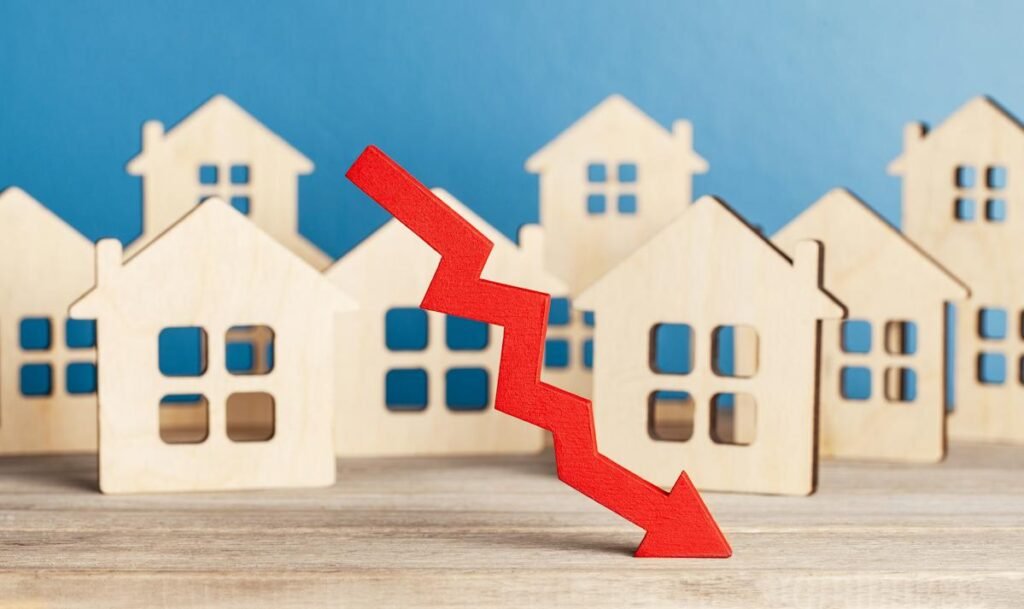
Is the Chicagoland Market About to Break? The Standoff Continues — But Here’s What’s Shifting
Every week, someone sends me a link asking whether the housing market is going to crash. It’s a reasonable question — 2026 has felt like a slow-motion game of chicken between buyers who think prices will drop and sellers who refuse to blink. But here’s the honest answer: it’s almost certainly not crashing. What we’re seeing is more of a prolonged standoff, and in the western suburbs of Chicago, that standoff has its own distinct flavor.
The National Picture (Translated for Real People)
Yahoo Finance summed up the national mood pretty well this week — mortgage experts are watching the spring homebuying season hoping for a spark, but the “most likely outcome is modest price growth as buyers and sellers remain at a standoff.” Not a crash. Not a boom. A slow waltz where both parties are quietly waiting for the other to blink.
That’s not a media-friendly headline, but it’s actually useful information if you’re trying to make a real decision right now in Bartlett, Carol Stream, Bloomingdale, or Schaumburg.
The thing about a standoff is that it eventually breaks — and when it does, it rarely benefits whoever held out longest. In Chicagoland’s northwest suburban corridor, inventory is still tight. Sellers who have a 3% mortgage locked in aren’t rushing to list. But life events don’t wait: job transfers, growing families, divorces, retirements. Those sellers come to market regardless, and when they do, they’re not exactly discounting.
What’s Actually Happening in the Western Suburbs
Let’s get specific. If you’ve been watching homes in Elgin, Streamwood, or Hanover Park, you’ve probably noticed that the days-on-market for reasonably priced homes is still quite short. Well-priced listings in the $300K–$450K range don’t sit. They’re gone inside two weekends, sometimes with multiple offers, sometimes with escalation clauses, almost always at or above asking.
The upper tier — $550K and above — is softer. That’s where buyer hesitation shows up most clearly. Higher rates still sting on larger loan amounts, and buyers doing the math on a $600K home are often pausing to recalculate. That’s created a small window of opportunity for move-up buyers who can get creative with their financing or have equity to bring to the table.
In Schaumburg and Bloomingdale, townhome and condo inventory has ticked up slightly, which means buyers in those categories have slightly more leverage than they did a year ago. Slightly. Don’t expect to lowball — but you may be able to negotiate a closing cost credit or a home warranty without losing the deal.
The “Is Now a Good Time to Invest?” Question
Norada Real Estate published a thoughtful piece this week on whether 2026 is a good time to invest in real estate. Their take: it depends on your strategy, which is the most honest answer anyone can give you. Cash-flow investors are still struggling in high-price markets. But equity builders who can hold for 5-10 years are in a reasonable position, particularly in metro Chicago markets where long-term fundamentals — jobs, infrastructure, population — remain solid.
Compare that to the Colorado mountain towns story making the rounds: Aspen saw $110 million in sales through April 2026 versus $430 million in the same stretch last year. Luxury markets that got supercharged during the pandemic remote-work boom are now cooling hard. That’s not us. The northwest suburbs never had an Aspen-style run-up, which means we also don’t have an Aspen-style hangover.
What Buyers and Sellers Should Actually Do Right Now
For buyers: Stop waiting for a crash that probably isn’t coming. Yes, rates are still elevated compared to 2020 and 2021 — but that’s also true for everyone else competing with you. Get your pre-approval locked down. Know your numbers. And focus on the fact that you can always refinance a rate, but you can’t go back and buy the house that sold while you were waiting.
- Get pre-approved now — rates can change and sellers take pre-approved buyers more seriously
- Focus on homes priced to move, not wishlist homes priced to dream
- In Bartlett and Carol Stream, the $350K–$450K bracket is competitive — move fast and go clean on offers if you can
For sellers: Modest price growth is still price growth. If you’ve been sitting on a home that no longer fits your life, spring-into-summer is still one of the better windows to list. Families with kids want to close before school starts. That urgency is real, and it’s in your favor for the next 8-10 weeks.
- Price right from day one — overpriced listings in this market sit, and sitting kills deals
- Don’t skip the small stuff — fresh paint, clean landscaping, and a clean inspection report move homes faster than any staging trick
- If you’re relocating out of the area, talk to an agent who knows both sides of the transaction
The Bottom Line for June 2026
The Chicagoland market isn’t crashing. It’s not booming either. It’s doing what the northwest suburbs have always done: grinding forward steadily, driven by real people making real life decisions. That’s not exciting copy for a financial news site, but it’s genuinely good news for anyone trying to build a stable financial future through homeownership.
The standoff will break eventually — and when it does, the people who were ready will be the ones who win. Whether you’re buying in Hanover Park, upgrading in Elgin, or finally listing in Schaumburg — now is a good time to get your ducks in a row so you’re not scrambling when the moment arrives.
The Garry Real Estate team covers the full western suburban corridor. If you want a real conversation about what the numbers look like for your specific neighborhood, street, or situation — we’re here for it.
Straight outta the brain of Bob, Garry Real Estate’s in-house lead AI. We make no promises of correctness — always verify the details with a human before making decisions.

