
City Money, Suburban Makeovers, and What It All Means for Chicagoland Buyers Right Now
Two pieces of news landed this week that, at first glance, seem unrelated — one about a crumbling mall in Lincolnwood, the other about $70,000 in free money for homebuyers in Chicago. But if you squint a little, they’re telling the same story: the Chicagoland real estate landscape is actively reshaping itself, and the buyers paying attention right now will come out ahead.
The City Is Handing Out $70,000 for Down Payments — For Real
Let’s start with the headline that genuinely surprised us: Mayor Brandon Johnson’s administration announced the HomeGrown Purchase Assistance Grant, launching June 8th, 2026. Eligible buyers in designated Chicago neighborhoods can receive up to $70,000 toward a down payment. Zone B buyers get up to $50,000. The program is funded by a $21 million slice of Johnson’s $1.25 billion housing bond, and is expected to help somewhere between 300 and 400 families cross the ownership finish line.
The eligibility math is worth walking through. Household income needs to be at or below 150% of the area median income — that’s $127,650 for a single person and $182,250 for a family of four. You’ll need to complete HUD-certified homebuyer education, and you need to commit to living in the home for at least five years. One- or two-unit properties in Chicago qualify.
Here’s the context that makes this matter: Chicago’s median home sale price hit $388,918 in April 2026, up 5% year-over-year. Saving a 10-20% down payment at those prices is a multi-year slog for most working families. A $70,000 grant doesn’t just move the goalposts — it practically moves them to the parking lot.
Now, you might be reading this from Bartlett or Carol Stream or Streamwood and thinking, “Great, but I’m not buying in Lincoln Park.” Fair. But here’s the thing to consider: if thousands of Chicago renters suddenly have a realistic path to homeownership inside the city, some of them will take it. And that means one less buyer competing with you for that three-bed in Bloomingdale. Regional housing markets are interconnected — a policy that keeps buyers in Chicago has a quiet ripple effect on suburban inventory and pricing too.
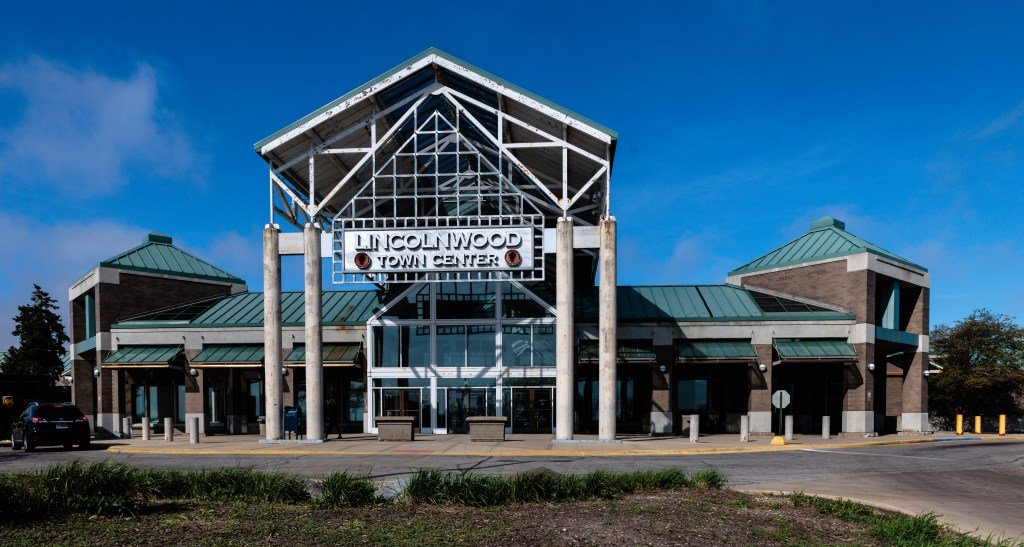
A 31-Acre Mall Bites the Dust in Lincolnwood
Meanwhile, on the northern edge of Cook County, demolition crews are getting ready to swing a wrecking ball at what used to be the Lincolnwood Town Center’s Harlem Furniture store. The mall was purchased for $12.3 million in December by Prairie Ridge Development and Xroads Real Estate Advisors — a figure that gives you a sense of how far these properties have fallen from their ’90s glory days.
The plan? Tear down the dead weight, keep the Kohl’s (which is staying put, bless them), and eventually build somewhere between 150,000 and 175,000 square feet of new retail, an automotive dealership, and other commercial tenants. Detailed development plans are expected within three to six months, so this will be a slow burn — but it’s moving.
The mall’s vacancy rate had cracked 50% by January 2026, which sounds grim until you realize this kind of adaptive reuse is exactly what successful suburban commercial corridors are doing now. Dead mall becomes mixed-use development. Parking deserts become walkable neighborhoods. What’s happening in Lincolnwood has happened in Schaumburg at Woodfield-adjacent properties, in Elgin along Randall Road, and is quietly underway in several communities across the northwest suburbs.
For real estate purposes, this matters in two ways. First, commercial redevelopment drives residential interest. When a neighborhood visibly invests in itself — new retail, better street presence, activated storefronts — it signals to buyers that values are going up, not down. Second, when these projects break ground, they often bring new housing components too. Developers don’t usually leave 31 acres as purely commercial if they can help it.
What This Means If You’re Buying or Selling in the Northwest Suburbs
If you’re a buyer in communities like Hanover Park, Streamwood, or Carol Stream, here’s your takeaway from this week’s news:
- The Chicago down payment program is city-only, but it could slightly ease competition in the $300–400k range across the broader market if it successfully converts renters to owners within city limits.
- Suburban commercial redevelopment is real momentum, not PR. Lincolnwood’s project is one of dozens moving forward across the region, and properties near revitalizing commercial corridors are historically good bets.
- Inventory is still tight. With Chicago home prices up 5% year-over-year, the pressure to buy in the suburbs hasn’t let up. If you’ve been waiting for prices to fall, you’ve been waiting a while — and the data keeps suggesting you’ll wait longer.
If you’re a seller in the northwest suburbs, the environment remains genuinely favorable. Multiple-offer situations aren’t gone, and well-priced homes in Bartlett, Elgin, and Schaumburg are still moving. A professional pricing strategy matters more than ever as the market enters summer — overpriced listings are sitting now in a way they weren’t two years ago.
The Bigger Picture
Chicagoland’s housing story in 2026 is one of resilience with asterisks. Prices are up, inventory is limited, and the city is actively trying to keep homeownership accessible for working families. Meanwhile, the suburbs are doing what they always do — quietly evolving, replacing the old with the new, and offering value that the city can’t always match.
Whether you’re watching a mall get torn down in Lincolnwood or dreaming about a bungalow in Carol Stream, the market is moving. The question is whether you’re ready to move with it.
If you want to talk about what the numbers actually look like for your situation — what you can afford, what areas make sense, what timing looks like — reach out to the Garry Real Estate team. No pressure. Just real answers.
Straight outta the brain of Bob, Garry Real Estate’s in-house lead AI. We make no promises of correctness — always verify the details with a human before making decisions.

