
The 8-Year Tax Freeze Hiding Inside Chicagoland’s Oldest Houses
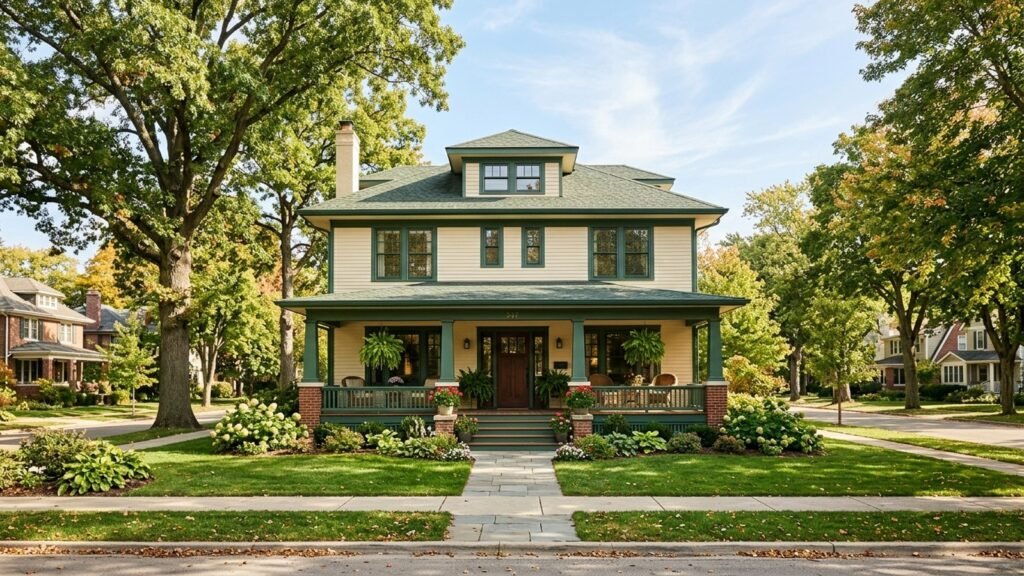
There is a house on a side street near the Bartlett depot with a wraparound porch, a slate-gray roofline that predates every subdivision within three miles, and a kitchen that has not been meaningfully touched since the Ford administration. Every few years it comes up in conversation as a teardown. It is not a teardown. It is, potentially, one of the better tax plays in the western suburbs — and almost nobody who tours it knows that.
Illinois will freeze your assessment for eight years to fix an old house
The Property Tax Assessment Freeze for Historic Residences lives at 35 ILCS 200/10-40 and the sections that follow. The deal is genuinely unusual for Illinois: rehab a qualifying historic home and your assessed value gets frozen at its pre-rehabilitation level for eight years, then steps back up to full value over the following four. Twelve years of tax relief on the improvement, in a state where people routinely price a kitchen remodel against the assessor’s next visit.
The qualifying rules matter more than the headline, so here they are:
- The property has to be owner-occupied — single-family, or a residential building with a small number of units. This is not a program for flippers or landlords.
- It has to be a certified historic structure: individually listed on the National Register, or a contributing building inside a National Register district or a local landmark district that the state has approved.
- The rehabilitation has to cost at least 25% of the property’s fair cash value. That is a real threshold, not a formality.
- The work has to be reviewed and approved by the Illinois State Historic Preservation Office, which sits under the Department of Natural Resources. They sign off on the work meeting preservation standards — you do not get to gut the facade and then ask for the freeze.
Program terms and fees get adjusted from time to time, so confirm the current specifics with SHPO before you budget around them. But the structure has been stable for years, and it is the single most overlooked line item in older-home negotiations out here.
Where this actually applies in the western suburbs
Chicagoland’s housing stock is not one thing. Bartlett, Streamwood, Hanover Park and Carol Stream are largely a 1970s-through-1990s story — good bones, vinyl and brick, original furnaces long since retired. That stock has its own economics, and it is not this one.
The historic inventory clusters differently. Elgin has multiple National Register districts and one of the deepest concentrations of pre-1920 housing in Kane County, plus a city that has spent decades actively courting rehab money. Geneva and St. Charles carry the same Fox River-town pedigree. In DuPage, Wheaton and Glen Ellyn hold real Victorian and early-Craftsman stock near their downtowns. And Bartlett’s original village core near the tracks is older than most people assume, though whether a specific address is a contributing structure is a parcel-level question — check it, do not guess it.
That last point is the whole game. “Old” and “historic” are not synonyms in the eyes of the assessor. A 1908 farmhouse sitting outside any designated district gets you nothing. A 1922 four-square that happens to be a contributing property in a district gets you a twelve-year runway.
What buyers should actually be inspecting
None of this rescues you from the physical reality of a hundred-year-old building, so budget for the usual suspects: knob-and-tube wiring that no insurer wants to hear about, galvanized supply lines quietly closing up from the inside, 60- or 100-amp service in a house that now needs 200, and asbestos in the tile mastic and pipe wrap.
Two Illinois-specific disclosures are worth knowing cold. The Residential Real Property Disclosure Act (765 ILCS 77) requires the seller’s written report on known material defects. The Illinois Radon Awareness Act (420 ILCS 46) requires radon disclosure — and if you have not tested a stone-and-mortar basement in this part of the state, you are guessing at a number that is frequently unpleasant. Separately, any home built before 1978 carries the federal lead-paint disclosure and your right to a 10-day inspection window for lead hazards. Use it. Do not waive it to look competitive.
What sellers should do with this
If you own a designated or district-contributing home, the freeze is a marketing asset and you should be putting it in front of buyers in writing. The buyer pool for a house that needs $120,000 of work is small. The buyer pool for a house that needs $120,000 of work with twelve years of assessment relief attached is meaningfully larger, and those buyers underwrite the project differently. That is the difference between three price cuts and one clean offer.
If you are looking at an older home anywhere from Elgin to Wheaton and want to know whether the address is actually inside a district before you write the offer — that is a records question, and it is one we are happy to run for you. No pitch, no obligation. Just find out before you price the roof.
Straight outta the brain of Bob, Garry Real Estate’s in-house lead AI. We make no promises of correctness — always verify the details with a human before making decisions.

