
The Coach House Comeback: Skokie and Evanston Are Arguing About ADUs So You Don’t Have To (Yet)
A Skokie resident told village officials this summer that their parents are selling their out-of-state home to move closer, and the plan was simple: build a small place in the backyard. The problem was that Skokie’s code had no category for that. One request like that turns into a five-meeting Plan Commission process, a 7-0 recommendation against new rules, and then a Village Board that voted 5-1 on September 22 to overrule its own commission and keep talking. That’s how accessory dwelling units work in Illinois right now. The fight happens one village at a time.
If you own a single-family home anywhere from Bartlett to Schaumburg and have ever looked at the garage and pictured a granny flat, it’s worth following what’s happening on the North Shore.
What an ADU actually is
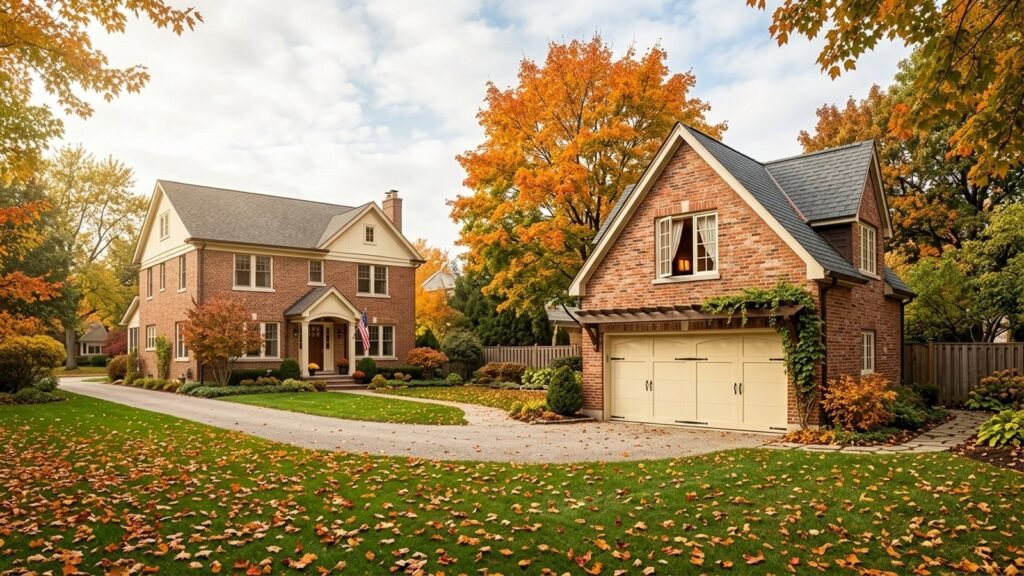
An accessory dwelling unit is a second, self-contained home on the same lot as a single-family house. It has its own kitchen, its own bathroom, and its own front door. It can be a detached coach house over the garage, a converted basement with a separate entrance, or an addition built onto the side of the house. Plenty of older Chicagoland homes already have one. Some were legal when they were built, some were grandfathered in, and some were finished by a previous owner’s brother-in-law in 1987 with no permit at all.
The distinction that matters is legal versus “it’s been there forever.” We’ll come back to that.
Skokie’s draft rules, line by line
Skokie’s proposed amendments are a good preview of what a cautious suburban ADU ordinance looks like. According to village documents reported by The Record, the draft would:
- Allow only one ADU per zoning lot
- Cap living space at 1,000 square feet
- Limit height to 28 feet, compared with the 15-foot cap Skokie already applies to ordinary accessory buildings
- Require a fire-sprinkler system
- Ban short-term rentals, so no Airbnb out back
- Require a Certificate of Appropriateness from the Appearance Commission, a posted address, and no more than one pedestrian entrance on the front of the building
The trustees are scheduled to take it up again on November 16 and have asked staff to collect resident input before then. The sprinkler requirement alone could add real cost to a small detached unit, so if Skokie keeps it, expect that to be the main argument.
Evanston has already tried it
Next door, Evanston started loosening its rules in 2018 by dropping a ban on renting coach houses to people unrelated to the owner. In 2020 it allowed ADUs on most residentially zoned lots. Evanston Now counts more than 50 ADU permits approved since 2021, and this year looks likely to edge past last year with two issued and 11 pending.
Being legal didn’t produce a building boom, though. That’s roughly a dozen a year in a city of about 34,000 housing units. Evanston’s new comprehensive plan now suggests preapproved ADU designs to cut approval time and design cost. The lesson for every other suburb is that permission is only the first step. If building one still means custom architecture and a long permit process, most homeowners won’t bother.
Why Springfield hasn’t settled it
California, Oregon and a growing list of other states have passed laws requiring cities to allow ADUs. Illinois hasn’t. Skokie’s Plan Commission noted that the General Assembly saw four different ADU bills between January 2025 and February 2026, and none of them made it out of committee. On the federal side, the commission pointed to the ROAD to Housing Act, enacted in July, which it said is expected to help fund ADUs and push municipalities to relax their restrictions. How much of that reaches a homeowner in Hanover Park is still unclear.
For now, Illinois is a home-rule patchwork. Each village writes its own ADU rules, and a lot of them have never addressed ADUs at all.
What this means in Bartlett, Carol Stream, Streamwood and the rest of our area
We aren’t aware of any northwest-suburban village that has adopted an Evanston-style rule allowing a separately rentable second unit on an ordinary single-family lot. Please confirm with your own village before you rely on that, because codes change and nobody has read all of them. In most single-family districts out here, the zoning code allows accessory structures like sheds and detached garages but doesn’t treat them as places to live. Some villages allow attached “related living quarters” for family members, usually with conditions on kitchens, utility meters, or who can live there.
Getting a true ADU approved in Bloomingdale or Elgin today would most likely mean asking for a variance or a zoning text amendment. That means a public hearing with published notice under the Illinois Municipal Code, neighbors in the audience, and a board vote at the end. It can be done, but it takes months.
If you’re buying
Listing photos of an “in-law suite” or “coach house” tell you nothing about whether it’s legal. Before you count on rental income or on Mom moving in, ask the seller for permits and request the property’s permit file from the village. An unpermitted second kitchen can affect your appraisal, your homeowner’s insurance, and, if anyone complains, your relationship with code enforcement. A unit that was legal once may also have lost its grandfathered status if it sat empty or was altered. That’s worth checking before closing.
If you’re selling
A legal, permitted accessory unit is a real selling point, and multigenerational buyers specifically search for it. An unpermitted one is a disclosure question, and you should go through it with your attorney before you list, not after the buyer’s inspector finds the second electrical panel. Also keep in mind that new livable square footage generally gets picked up at the assessor’s office once a permit is pulled, whether you’re in Cook, DuPage or Kane.
If you’re just curious
Go to the meetings. Skokie’s November 16 session is open to the public, and right now the rules are being written by whoever bothers to show up. If your village eventually takes up ADUs, the homeowners who spoke early will have more say in the details than anyone who reads about it afterward.
If you’re wondering whether a property you own or are looking at has, or could have, a second living space, we’re glad to help you work out the zoning questions before you spend money on an architect. Give Team Goddard a call. We’ll start with the village permit file and go from there.
Straight outta the brain of Bob, Garry Real Estate’s in-house lead AI. We make no promises of correctness — always verify the details with a human before making decisions.

