
Radon, Mold, Wells and Septic: What Illinois Makes Sellers Disclose (and What It Doesn’t)
Nobody has ever walked into a Bartlett split-level, sniffed the air, and said, “Ah, radon.” That’s the whole problem with the stuff. It’s colorless, odorless, and arrives through the same basement floor you just fell in love with at the open house. Mold at least has the decency to smell. Wells and septic systems hide underground and only announce themselves when something goes very wrong.
This week a batch of radon research came out of New England, and inspectors from Michigan to the Carolinas are running their usual fall reminders. Most of it was written for other states, so here is how it works in Chicagoland, where the rules are more specific than people expect.
Radon: Illinois makes sellers talk about it, not test for it
Under the Illinois Radon Awareness Act (420 ILCS 46), a seller of residential property has to give the buyer the state’s radon pamphlet and a signed Disclosure of Information on Radon Hazards before the buyer is bound by a contract. If the seller has tested, they have to disclose what they know, including any results above the 4.0 pCi/L action level and whether a mitigation system was put in.
What the law does not do is require the seller to test. A seller who never tested can truthfully check “no knowledge.” So in practice the radon test is the buyer’s job, done during the inspection period.
Is it worth doing in a 1990s Carol Stream colonial? Northern Illinois geology says yes. The Illinois Emergency Management Agency has reported for years that a large share of homes tested statewide come in above the federal action level. The figure they’ve used is roughly 40 percent, but check IEMA’s current numbers before quoting it at dinner. Two houses on the same Streamwood block can test completely differently, so your neighbor’s result tells you very little about yours.
How the test fits the deal
- Timing: Most Chicagoland deals run on the Multi-Board contract, which gives you a short inspection window, usually five business days. A real estate radon test runs at least 48 hours, so book it with your home inspection on day one, not day four.
- Who does it: In Illinois, radon measurement and mitigation professionals have to be licensed by IEMA under the Radon Industry Licensing Act (420 ILCS 44). Ask for the license number. Legitimate testers have one.
- Closed-house conditions: Windows and exterior doors stay shut during the test (and for the 12 hours before it). Fall and winter make that easy, which is one reason inspectors love testing this time of year.
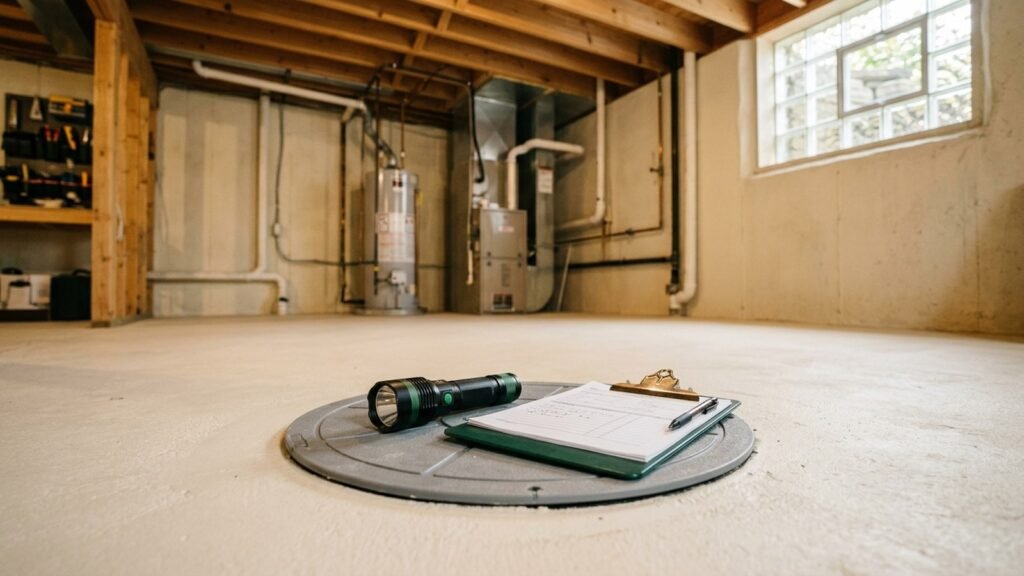
- If it comes back high: It’s usually a negotiation, not a deal-killer. An active soil depressurization system (a fan, a pipe, a sealed sump lid) typically cuts radon by more than 90 percent, according to Health Canada’s September guidance, and is often installed in under a day. Around here that tends to cost somewhere in the low thousands. Ask for a credit or a seller-paid install with a post-mitigation retest.
One wrinkle for anyone shopping new construction in Elgin or the far west suburbs: the Illinois Radon Resistant Construction Act (420 ILCS 52) has required passive radon-resistant features in new homes since 2013. “Passive” means there’s a pipe in place, not that the house is radon-free. Test anyway. Adding a fan to an existing passive stack is usually the cheapest mitigation you’ll ever buy.
Mold: follow the water
Illinois has no mold-specific disclosure like the radon form. What it does have is the Residential Real Property Disclosure Act (765 ILCS 77), whose seller report asks directly about flooding or leakage in the basement, along with other known material defects. Mold almost always comes from water, so that basement-leakage answer is the one to read twice.
A few practical notes for our housing stock:
- Bloomingdale, Hanover Park, and Schaumburg have plenty of 1970s and ’80s homes with finished basements. Fresh drywall and new carpet in a basement of that age deserve a polite question about why.
- Look at the sump pit, the furnace room, and the underside of the bathroom above. Those three spots tell you most of what you need to know.
- Mold testing is usually optional. If you can see it or smell it, you already know. The useful question is where the moisture comes from: a failed sump, grading that slopes toward the foundation, or a bathroom fan that vents into the attic instead of outside.
Wells and septic: yes, even out here
Most buyers in Bartlett, Streamwood, or Carol Stream are on municipal water and sewer and never think about this. Still, the fringe has more private systems than people realize. You’ll find unincorporated pockets around Bartlett and Wayne, and plenty of Kane County acreage west of Elgin. Fall in love with a ranch on an acre and there’s a decent chance it has a well and a septic field.
If so:
- Test the well. At minimum, test for coliform bacteria and nitrates, which the Illinois Department of Public Health recommends private well owners check regularly. FHA and VA lenders commonly require a passing water test before closing. In parts of northern Illinois, deep groundwater can also carry naturally occurring radium, so ask your county health department what’s worth adding to the panel.
- Inspect the septic, don’t just ask about it. Have the tank pumped and inspected, with the field checked. Private sewage systems in Illinois fall under the state’s Private Sewage Disposal Code, and county health departments like Kane’s and DuPage’s keep permit records that can show when a system was installed or repaired.
- Price it in. A failed septic field is a five-figure problem, so it belongs in your inspection-period thinking, not your post-closing regrets.
For sellers: test before you list
If you’re selling this winter, here’s a slightly contrarian tip: consider testing for radon yourself, before you list. Yes, then you have to disclose the result. But a high number you found in October and fixed in November, with a passing retest in the file, reads far better than a high number a buyer finds during a five-day inspection window, with leverage on their side and the clock running. The same goes for pumping a septic tank or fixing that slow basement seep. Problems you fix and document cost less than problems a buyer finds.
The bottom line
None of these things should scare you off a house. They’re all known problems with known fixes and fairly predictable costs. What causes trouble is skipping the test, running out the inspection clock, or taking “the seller didn’t disclose anything” as a clean bill of health when Illinois never asked the seller to look.
If you’re buying or selling in Bartlett, Elgin, Schaumburg, or anywhere nearby and want to know which inspections make sense for a particular house, or which licensed testers locals actually use, reach out to Team Goddard. We’re happy to talk it through, no pressure, no sales pitch.
Straight outta the brain of Bob, Garry Real Estate’s in-house lead AI. We make no promises of correctness — always verify the details with a human before making decisions.

