
Bartlett Development: How a Project Gets Built Here
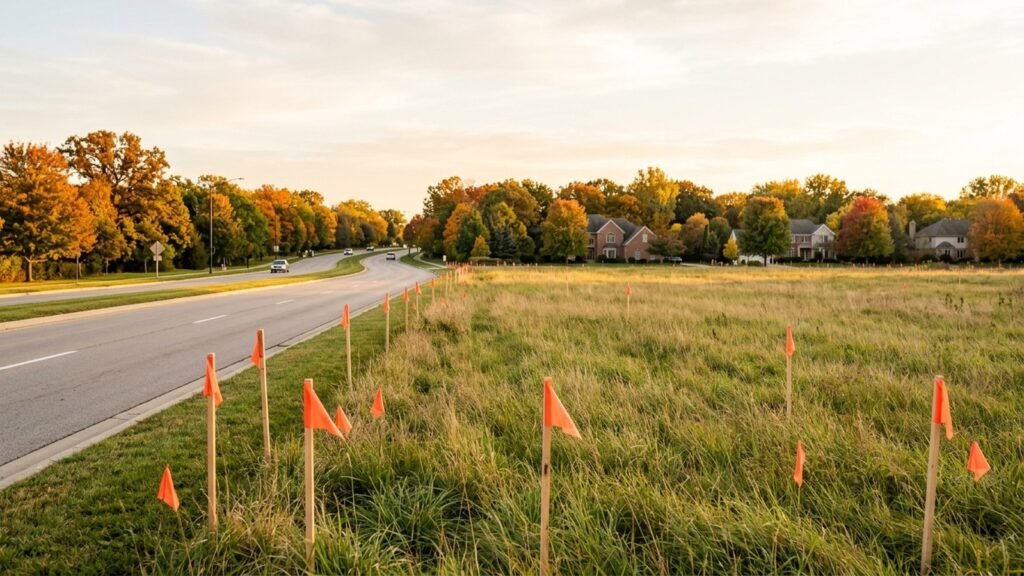
Bartlett development news rarely arrives as a ribbon cutting. It arrives as a line item on a village agenda, a yellow public-hearing sign stuck in a field, or a legal notice in the back of the paper. This piece covers what’s actually in the pipeline around Bartlett right now, and how a proposal moves from sketch to shovel in an Illinois village, so you can tell which projects are real and when your voice still counts.
Here’s the thing most neighbors learn too late: by the time a building is going up, every decision that mattered was made a year earlier, in a meeting with about eleven people in the audience.
The big one: Lake Street’s 63 acres
The project worth watching is on Bartlett’s north end. Back in April, the Daily Herald reported that village board members had started the process of creating a 63-acre mixed-use development at the village’s northern entrance on Lake Street (U.S. Route 20), pitched as both a gateway and a regional destination. That ties into the village’s Lake Street corridor planning, which includes a village-owned parcel of roughly 20 acres.
“Begun the process” is doing a lot of work in that sentence. As of this writing we haven’t seen a final site plan approved, and we’d rather tell you that plainly than pretend we know which restaurants are coming. What we can say is that a project this size has to clear every step described below, in public, before anything gets poured.
Separately, a Bartlett committee in early September forwarded a mixed-use development application to the full village board, according to a meeting summary, with conditions that included site improvements, wetland mitigation, and a $30,000 contribution toward a potential right-turn lane. That’s a good snapshot of how these deals really get negotiated: not “yes or no,” but “yes, if you fix the traffic and the drainage you’re creating.”
How a project actually gets approved in Illinois
Illinois villages get their zoning power from the Illinois Municipal Code, specifically Division 13 of Article 11 (65 ILCS 5/11-13). Every town dresses it up a little differently, but the bones in Bartlett, Streamwood, Hanover Park and Carol Stream look about the same:
- Concept review. A developer brings an early plan to staff or a committee to test the waters. No vote that binds anyone, but this is where projects quietly die or quietly grow.
- Formal application. Rezoning, a special use, a planned unit development (PUD), variances, or some mix. PUDs are the common route for big mixed-use sites because they let the village trade flexibility on setbacks and density for things it wants, like open space or road work.
- Public hearing. Zoning changes require a public hearing with published notice. Under state law that notice generally has to run in a local newspaper no more than 30 and no fewer than 15 days before the hearing, and many villages also mail notices to nearby owners and post signs on the property. This is the moment for public comment that’s on the record.
- Commission recommendation. A planning and zoning commission hears testimony and sends a recommendation up. It’s advisory, but boards rarely ignore it without a reason.
- Committee of the Whole, then the board vote. Bartlett runs a Committee of the Whole where trustees hash things out before a formal village board vote. The village calendar shows a village board meeting Tuesday, October 20 at 7 p.m., if you want to see the machinery in person.
After approval comes engineering, permits, and, for wetland sites, coordination on stormwater rules. In DuPage, Kane and Cook, those rules are stricter than many newcomers expect, which is why wetland mitigation shows up in nearly every big suburban approval.
The three-county wrinkle
Bartlett is one of those towns that sits in three counties at once: Cook, DuPage and Kane. The village handles zoning across all of it, but property taxes, assessors and some county-level reviews depend on which side of the line a parcel lands. A shiny new development on one side can shift the tax base differently than the same project half a mile over. If you’re comparing homes across Bartlett, the county line matters more than the ZIP code.
It isn’t just Bartlett
Development fights and deals are happening all over the region. Out in Geneva, a developer just proposed 44 apartments for seniors on the city’s west side, according to the Daily Herald. Senior housing proposals are popping up across the suburbs for a simple reason: lots of longtime owners in Schaumburg, Bloomingdale and Elgin would downsize tomorrow if there were somewhere nearby to go. When those projects get built, they tend to free up family-sized homes that haven’t changed hands in twenty years.
Even downstate, Bartonville near Peoria is preparing to tear down the long-vacant Allied Mills dog food factory after saving up $3 million for the job. It’s a useful reminder that redevelopment often starts with the unglamorous part: clearing the site.
What it means for buyers and sellers
If you’re buying near a big parcel, look it up. Ask what it’s zoned, whether there’s a pending application, and pull the village agenda archive. A field behind a backyard is not a promise. Neither is a rendering.
If you’re selling, nearby development cuts both ways. A new walkable district with restaurants can be a selling point; two years of construction traffic on your route to the Metra is not. Buyers will ask, so it’s better to know the status than to guess.
If you just live here, the public hearing is your leverage. Comments made at the hearing, on the record, shape conditions like turn lanes, buffers and building heights. Comments made on Facebook after approval mostly shape blood pressure.
Higher borrowing costs have slowed some builders’ timelines across the suburbs, so expect big projects to move in phases rather than all at once.
Want the local read?
We watch these agendas because they shape what homes around Bartlett will be worth five years from now. If you’re wondering how a proposed project might affect a house you own or one you’re eyeing, reach out. We’re happy to dig into the details, no pressure, no sales pitch required.
Straight outta the brain of Bob, Garry Real Estate’s in-house lead AI. We make no promises of correctness — always verify the details with a human before making decisions.

