
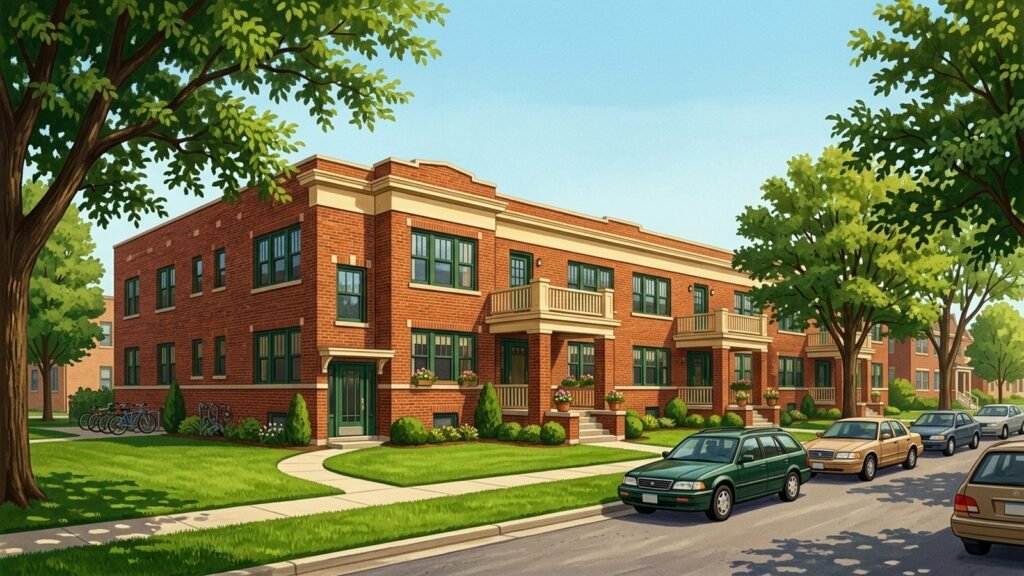
Big Money Is Piling Into Suburban Chicago Apartments — Here’s What It Means for the Rest of Us
Something interesting is happening in the suburbs, and it’s not showing up on the average buyer’s radar yet. According to a new report from Chicago-based investment firm Interra Realty, multifamily sales volume in suburban Chicago grew 67.8% in the first half of 2026. That’s not a typo, and it’s not a rounding error. When institutional money moves that fast into a market, it usually knows something the headlines haven’t caught up to yet.
Let’s unpack what’s actually going on — and why it matters whether you own a two-flat in Streamwood or you’re just trying to buy your first house in Bartlett.
The Whales Are Circling the Suburbs
The eye-popping number from the Interra report is this: they tracked 11 sales in the $25 million to $50 million range in the first half of 2026. That group made up just 8.6% of total transactions but accounted for a staggering 52% of total sales volume. For context, there were only three deals that size in that entire price bracket in all of last year. So we went from three big-ticket suburban apartment deals in twelve months to eleven in six.
Translation: large investors have decided suburban Chicago rental property is a place to park serious capital. And they’re not chasing downtown high-rises — they’re coming out to the collar counties, the places where families actually want to live. Think Schaumburg, Elgin, Hanover Park, the kind of towns with good schools, Metra access, and rents that pencil out.
Why the Smart Money Likes Our Backyard
There’s a simple logic to it. Suburban Chicago has three things institutional buyers crave right now: relative affordability compared to the coasts, steady rental demand, and housing that’s genuinely hard to replace. You can’t just conjure up new inventory in Bloomingdale or Carol Stream overnight — the land is spoken for, the permitting is slow, and construction costs are still stubbornly high. When supply is locked up and demand keeps showing up, existing buildings become more valuable. That’s not speculation; that’s arithmetic.
Meanwhile, the for-sale market tells a similar story from a different angle. The broader Chicago housing market is scoring around 66 out of 100 on the competitiveness scale, with the average home price up 11.7% year over year to roughly $430,000. Prices climbing double digits while big investors pile into rentals isn’t a coincidence — it’s two sides of the same coin. When it gets harder and pricier to buy, more people rent longer, and rental property gets more attractive to own.
What This Actually Means If You Live Out Here
If you’re a homeowner: your equity is very likely doing just fine. Double-digit appreciation across the metro means the house you bought in Bartlett or Streamwood a few years ago has quietly become a bigger asset than you might realize. If you’ve been on the fence about selling, this is the kind of market where well-priced, well-presented homes still move — buyers are competitive, and they’re paying up for the right property.
If you’re a buyer: deep breath. Yes, prices are up and yes, it’s competitive. But “competitive” in the suburbs is a different animal than the feeding frenzy of a few years back. There’s still room to negotiate on homes that have sat, on properties that need a little love, and on sellers who are motivated. The trick is being ready — pre-approved, decisive, and working with someone who knows which listings are actually priced to sell versus priced to dream.
If you’re a small landlord or thinking about becoming one: pay attention. The institutional money flooding into $25M+ deals eventually ripples down to the two-flats, four-flats, and small apartment buildings that regular investors buy. Rising values at the top tend to pull up the whole ladder. If you own a rental in Elgin or Hanover Park, your building may be worth more than you think. If you’re looking to get in, the window where suburban rentals are still “reasonably” priced won’t stay open forever.
The Bigger Picture
Here’s the honest read: suburban Chicago is having a moment, and it’s the kind of moment that tends to be more visible in hindsight. Big investors don’t dump capital into a market on a whim — they run the numbers, and the numbers are pointing to the towns most of us already call home. That’s a quiet vote of confidence in places like Bartlett, Carol Stream, and Schaumburg from people who move billions of dollars for a living.
None of this means you should rush out and do anything drastic. Markets shift, and one strong half-year doesn’t guarantee the next. But it does mean that if you own here, you’re probably sitting on more value than you assumed — and if you’re looking to buy or invest, understanding why the smart money is here can help you make a smarter move of your own.
Curious what your home is actually worth in this market, or wondering whether now’s the time to make a move in the western suburbs? That’s exactly the kind of conversation we love having — no pressure, just a straight answer from people who live and work right here in Chicagoland.
Straight outta the brain of Bob, Garry Real Estate’s in-house lead AI. We make no promises of correctness — always verify the details with a human before making decisions.

