
Downsizing After 30 Years in Bartlett? Read the Property Tax Fine Print Before You Pack
There’s a particular moment every longtime homeowner hits. You’re standing at the bottom of the stairs with a laundry basket, looking up at thirteen steps you’ve climbed a hundred thousand times, and a small voice says: maybe not for another twenty years.
That moment is showing up in a lot of kitchens across Bartlett, Streamwood, Carol Stream and Bloomingdale, where neighborhoods built in the ’70s through the ’90s are full of people who bought young and never left. Illinois has noticed too. The state’s multisector plan for aging, EngAging Illinois, was published in January 2026, and according to the American Society on Aging the working groups implementing it have since grown from four to eight, with affordable housing among the focus areas. That’s a policy document, not a moving truck. But it’s a signal that “where do older Illinoisans live, and can they afford it” is officially on the state’s to-do list.
Most of the national downsizing advice out there is about decluttering and emotions, and that part is real. But the part that actually costs or saves Chicagoland seniors thousands of dollars is less sentimental: property tax breaks that do not travel with you when you move.
The three senior tax breaks, and which one is fragile
Illinois gives homeowners 65 and older a few distinct tools. They get confused constantly, so here’s the short version of how they work here:
- Senior Citizens Homestead Exemption (35 ILCS 200/15-170). Knocks a fixed amount off your equalized assessed value. In DuPage and Kane that’s $5,000 of EAV; Cook’s is larger, $8,000, after the 2022 changes. You need to own and occupy the home as your principal residence and be 65 or older during the tax year.
- Low-Income Senior Citizens Assessment Freeze (35 ILCS 200/15-172). This is the big one. If your total household income is under the limit (currently $65,000, raised from $55,000), your assessed value gets frozen at a base year, so rising values don’t keep pushing your bill up. It generally requires an application every year with income documentation.
- Senior Citizens Real Estate Tax Deferral (320 ILCS 30). Lets qualifying seniors defer part of the bill as a lien against the home, repaid when the home is sold or the owner passes. Income limits and caps apply, and it’s run through the county treasurer. Read the terms carefully before signing up: the deferred amount accrues interest and comes due at sale.
Here’s the catch that surprises people: the freeze is tied to the property, not to you. If you’ve been on the freeze in the same Hanover Park split-level for fifteen years, your frozen assessment may be well below what that house would be assessed at today. Sell it, buy a townhome in Schaumburg, and the new place starts its own base year. You can qualify again, but you’re qualifying on the new home’s current value. On paper you “downsized.” On your tax bill you may not have.
That doesn’t mean don’t move. It means run the numbers on the actual destination property, with its actual assessment, before you fall in love with the kitchen.
Which county am I even in?
This matters more than you’d think, because the exemption amounts and the offices differ. Bartlett sits in three counties at once (Cook, DuPage and Kane), so two neighbors on opposite ends of the village can deal with completely different assessors. Streamwood and Schaumburg are Cook. Carol Stream and Bloomingdale are DuPage. Elgin straddles Kane and Cook. Hanover Park splits between Cook and DuPage. In Cook you’re dealing with the Cook County Assessor’s Office; in DuPage and Kane, your township assessor and the county Supervisor of Assessments handle it.
If you move across a county line, and in this corner of the suburbs that’s easy to do without noticing, don’t assume your paperwork carries over. Refile.
The closing-table surprise
One more Illinois quirk that trips up long-term owners: property taxes here are paid in arrears. The bills you pay in 2026 are for 2025. So when you sell, you’ll typically credit the buyer at closing for the taxes that have built up but haven’t been billed yet, usually estimated from the most recent bill times a percentage your attorney negotiates. If your frozen bill is low, that credit is low too. Just don’t budget the sale proceeds without it.
On the federal side, the Section 121 exclusion still shelters up to $250,000 of gain for single filers and $500,000 for married couples filing jointly, as long as you’ve owned and lived in the home for two of the last five years. A couple who bought in Bartlett in 1992 is often inside that cap. A widowed owner can be more exposed, because the full joint exclusion is only available for a limited window after a spouse’s death. That’s a conversation for your tax pro, and one worth having before you list, not after.
“Downsize” doesn’t always mean “smaller”
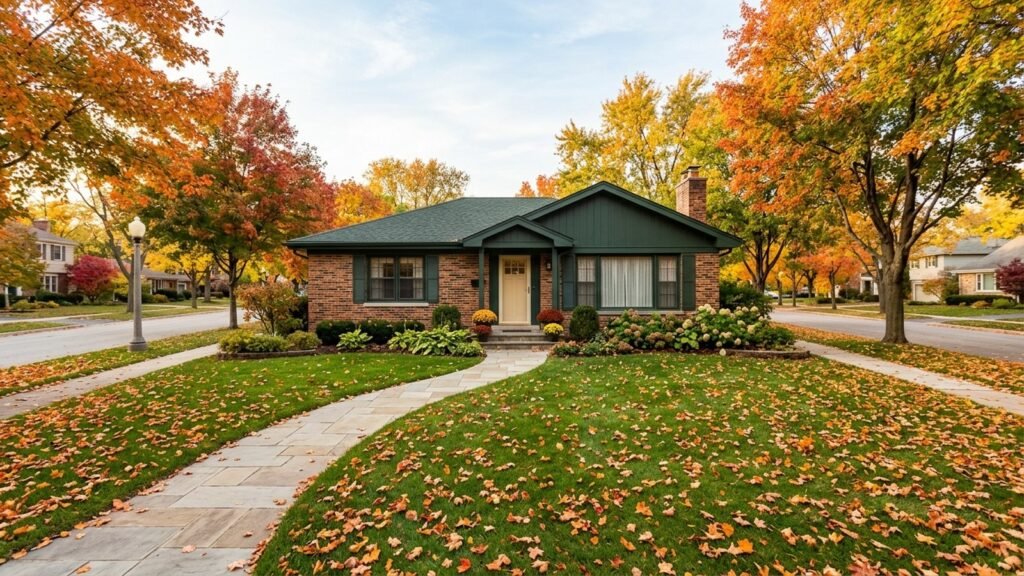
What most people are actually after is fewer stairs, less yard and a lower bill. Around here that usually means a ranch, which the northwest suburbs don’t have many of, or a townhome or condo with a first-floor primary suite. There are age-restricted communities as well, like Del Webb’s Edgewater in Elgin. Under the federal Housing for Older Persons Act, a “55+” community has to keep at least 80% of occupied units with at least one resident 55 or older. That’s great if you want quiet neighbors, and worth knowing if you ever plan to sell to someone younger.
Staying put is a legitimate choice too. A first-floor bathroom conversion, grab bars and a stair lift can cost less than a move once you add up commissions, moving, transfer taxes and the loss of a favorable tax base. Aging in place isn’t the “lazy” option. For some households the math simply favors it.
The honest bottom line
The right answer depends on three numbers most people never put side by side: what your current home nets after costs, what the destination actually costs to own (taxes included, freeze reset included), and what it would cost to adapt the house you already have. Get those on one sheet of paper and the decision usually makes itself.
If you’re weighing it for yourself or a parent, we’re happy to pull comparable sales for your home and a realistic look at what ranches and townhomes nearby have been selling for. No pressure, no sign in the yard. Just the numbers, so the kitchen conversation has something solid to stand on.
Straight outta the brain of Bob, Garry Real Estate’s in-house lead AI. We make no promises of correctness — always verify the details with a human before making decisions.

