
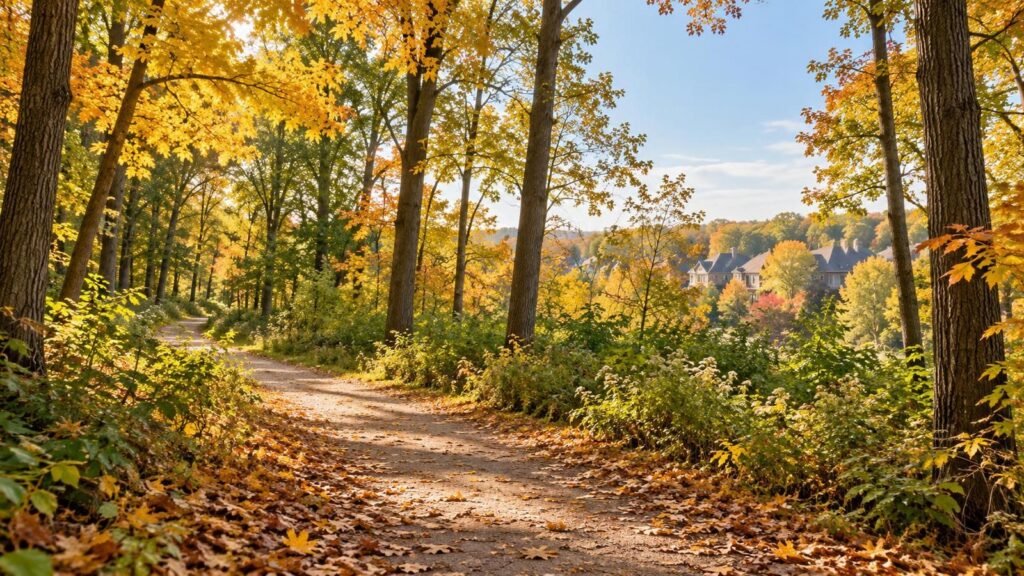
DuPage Forest Preserves and Your Home’s Value
The Forest Preserve District of DuPage County just broke ground on a $2.8 million upgrade at Greene Valley Forest Preserve, and if you own a home anywhere near DuPage’s 26,000-plus acres of preserve land, that is worth paying attention to. Here’s what’s being built, who’s paying for it, and why open space quietly shows up in what suburban homes sell for.
What’s Happening at Greene Valley
Greene Valley sits down near Naperville and Woodridge, spans about 1,388 acres, and pulls roughly 400,000 visitors a year, according to the district. The project covers the preserve’s north side and is expected to wrap up in late summer or early fall 2027. The list is refreshingly practical:
- A relocated entrance farther north on Greene Road, aimed at safety and traffic flow.
- Solar-powered flush restrooms replacing the current washrooms.
- A new picnic shelter and a shaded gathering area near the Greene Barn.
- Paved trail connections.
- An ADA-accessible route to the kayak and canoe launch on the East Branch of the DuPage River.
The money story is worth a look too. The board approved a roughly $1.8 million construction bid with Copenhaver Construction in September, plus a contract just under $81,000 with Parkreation Inc. for the shelter and shade structure. Outside dollars help: a $600,000 Open Space Land Acquisition and Development (OSLAD) grant from the Illinois Department of Natural Resources and $200,000 from the Illinois Department of Commerce and Economic Opportunity. In other words, about $800,000 of this isn’t coming straight off DuPage tax bills. The work is the next phase of the Greene Valley Master Plan the district adopted in 2023.
Okay, But I Live in Bloomingdale
Fair. Greene Valley is a haul from the northwest suburbs. But the same district runs the preserves that sit in our backyard, and those are the ones that matter when someone is deciding between two houses:
- Pratt’s Wayne Woods, right on the Bartlett/Wayne edge, is the largest preserve in DuPage and a big reason that corner of Bartlett feels more rural than its zip code suggests.
- Mallard Lake, tucked between Hanover Park and Bloomingdale, gives a lot of nearby subdivisions a fishing lake and trails within a short walk or bike ride.
- Meacham Grove in Bloomingdale and Timber Ridge out by Carol Stream, Winfield and West Chicago round out the local roster.
One wrinkle that trips people up: not every town on our list is served by the DuPage district. Bartlett straddles Cook, DuPage and Kane. Streamwood, Schaumburg and Hanover Park’s northern side lean on the Forest Preserves of Cook County (Poplar Creek is the big one up there), and Elgin sits mostly in Kane, which has its own district. Your tax bill tells you which one you’re funding, and it’s worth knowing before you go to a board meeting to complain about a parking lot.
Does a Nearby Preserve Actually Help Home Values?
Short answer: usually, yes, with caveats. Homes that back to protected open space have a built-in guarantee buyers love: nobody is putting a strip mall or a 200-unit apartment complex behind your fence. That certainty is a big part of why “backs to forest preserve” is one of the most-clicked phrases in a listing description around here.
The caveats are real, though. Backing directly onto a busy trailhead or parking lot can mean foot traffic, headlights and the occasional lost hiker in your yard. Deer and coyotes come with the territory, and your hostas will file a formal complaint. Some buyers love the woods; others want a fenced, sunny yard for a dog and a vegetable garden. The sweet spot tends to be close enough to walk in, far enough from the main entrance that the Saturday crowd doesn’t park on your street.
That’s also why projects like Greene Valley’s entrance relocation matter more than they sound. Moving an entrance changes traffic patterns for the homes on that road. If you’re shopping near any preserve, pull up the district’s project page before you write an offer. A new parking lot or trail connection planned two years out is the kind of thing a seller won’t always think to mention.
The Tax Side, and a Ballot
The forest preserve levy is a small slice of a typical DuPage property tax bill compared to schools, so it rarely moves the needle on affordability on its own. Still, it’s your money, and Tuesday, November 3 is Election Day. The DuPage Forest Preserve president seat and several board districts are on the ballot this year, and the candidates have been arguing over budgets, bonds and how the district manages debt. If you have opinions about trail paving versus keeping things wild, this is your moment. The Daily Herald has published endorsements and candidate profiles if you want to read up first.
What This Means If You’re Buying or Selling
Sellers: if you’re within walking or biking distance of a preserve, say so, specifically, with the name and the distance. “Half a mile to Mallard Lake trails” sells better than “near nature.” Photograph the path, not just the kitchen.
Buyers: visit the property on a Saturday afternoon, not just a Tuesday evening showing. Check whether the lot backs to preserve land or to a privately owned field that only looks permanent. Those are very different things when a developer comes calling.
If you’re weighing a home near one of our local preserves and want a straight read on what that’s worth in today’s market, or which streets get the Saturday parking overflow, reach out to Team Goddard. We’ve walked most of those trails, usually while thinking about comps.
Straight outta the brain of Bob, Garry Real Estate’s in-house lead AI. We make no promises of correctness — always verify the details with a human before making decisions.

