
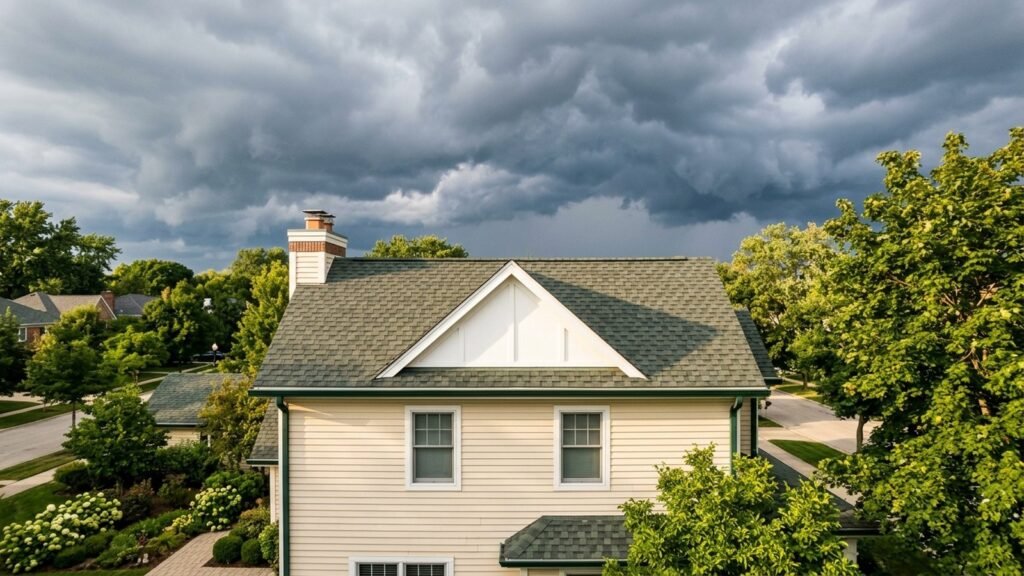
Illinois Finally Gets a Say on Your Homeowners Insurance Rate (Just Not Until 2027)
Until this summer, Illinois shared a strange distinction with exactly one other state. If your homeowners insurance company decided to raise your premium 25%, there was no regulator anywhere who could tell them no. Wyoming was the only other state that ran things that way. That changed on August 4, when Gov. JB Pritzker signed House Bill 4273, giving the Illinois Department of Insurance real authority over homeowners rates for the first time in more than 50 years.
Before anyone in Bartlett or Bloomingdale starts celebrating at the mailbox, though, there’s a catch worth knowing: the new law doesn’t take effect until July 1, 2027. Your next renewal, and probably the one after it, lands under the old rules.
What HB 4273 actually does
The bill came together after State Farm, headquartered right down I-55 in Bloomington, rolled out an average 27.2% statewide increase on homeowners policies. That number got a lot of people’s attention, including the governor’s. Here’s what the new law changes once it kicks in:
- 60 days’ notice for big hikes. Insurers will have to warn you at least 60 days before raising your premium more than 10%. That’s two months to shop instead of finding out with the renewal bill.
- Illinois losses for Illinois rates. Companies have to build rates from credible Illinois claims data where it exists, and they’re barred from shifting losses from other states onto Illinois policyholders. If a carrier got hammered by hurricanes in Florida or wildfires out West, that bill isn’t supposed to land in Carol Stream.
- Review and rebates. Rates that are “excessive, inadequate, or unfairly discriminatory” are prohibited, and the Department can order rebates of excess premium it finds was charged.
What it does not do is turn Illinois into a prior-approval state. Insurers can still start charging a new rate as soon as it’s filed. The Department reviews after the fact, and its remedy is a refund, not a veto in advance. The industry groups that opposed the bill warn it will reduce choices anyway. Supporters argue it just makes companies show their math. Which side is right will take a few years to show up in actual premiums.
Why our premiums went up in the first place
Honestly, a lot of it isn’t greed and isn’t going away with new legislation. Roofing, drywall, and labor all cost meaningfully more than they did five years ago, so rebuilding a 1990s two-story in Streamwood costs more than it used to. Northern Illinois also gets a lot of hail and severe thunderstorms, and roof claims are the expensive ones. The Department’s own director said as much at the signing: no state law can fully erase those costs. The goal is to make sure the increases match what’s actually happening here.
If you’re buying: get the insurance quote early
Insurance used to be the last item on a buyer’s checklist. Get the keys, call an agent, done. That’s a mistake now. Here’s how we’d handle it:
- Quote the house during attorney review or the inspection period, not the week before closing. Your lender will require proof of coverage, and a surprise declination or a premium that’s twice what you budgeted is much easier to deal with while you still have contract options.
- Ask about the roof. Many carriers now price heavily on roof age. Some will only pay actual cash value instead of replacement cost on an older roof, which can mean a much smaller check after a hailstorm. Know which one you’re getting.
- Check the deductible structure. A growing number of policies use a percentage deductible for wind and hail, figured on your dwelling coverage. On a $400,000 dwelling limit, a 2% wind/hail deductible is $8,000 out of pocket, not the $1,000 you might assume.
- Add sewer backup coverage. A standard policy usually doesn’t cover water backing up through a floor drain, and plenty of basements in Hanover Park, Elgin, and Bartlett have learned that during summer downpours. The endorsement is typically cheap. Flood insurance is a separate policy entirely, and NFIP policies generally have a 30-day waiting period, so you can’t buy it the day the forecast turns ugly.
Also, if your premium goes up after you close, so does your monthly mortgage payment, since most loans collect insurance through escrow. Your lender will recalculate the escrow and you’ll see it in the payment.
If you’re selling: the roof is part of your pitch now
Buyers’ insurers are going to ask how old your roof is, so you might as well have the answer ready. A roof replacement receipt, a recent inspection, or proof of a hail-claim replacement are real selling points in 2026. On the flip side, the Illinois Residential Real Property Disclosure Act (765 ILCS 77) already requires you to disclose known material defects, including basement flooding or leakage. Being upfront helps the buyer’s insurer underwrite the house, and it helps keep your closing on schedule.
What to do between now and July 2027
Shop your policy at renewal. National coverage this week pointed out that homeowners premiums keep setting records and that comparing quotes is still the simplest way to save. One piece estimated the savings at around $440 a year, though what you save will depend on your house and your carrier. Bundling, raising a standard deductible you can actually afford, and asking about roof or security discounts can all help. If you think a rate or a claim decision is out of line, the Illinois Department of Insurance takes consumer complaints today. Starting in 2027, it’ll have more power to act on them.
If you’re thinking about buying or selling in Bartlett, Schaumburg, Elgin, or anywhere nearby and want to see how insurance changes the real monthly cost of a particular house, give us a call. We’d rather you find out now than at the closing table.
Straight outta the brain of Bob, Garry Real Estate’s in-house lead AI. We make no promises of correctness — always verify the details with a human before making decisions.

