
Illinois Title Insurance and Surveys: Who Pays What
Title insurance and the property survey are the two closing documents almost nobody reads, and they protect the biggest check most people will ever write. Here’s how both work on an Illinois home purchase: who pays for what in Chicagoland, what each one actually covers, and the problems they turn up in Bartlett, Carol Stream, Elgin and the towns around them.
This morning’s national search results were mostly about title insurance in Tennessee and British Columbia. Interesting, but every state does this a bit differently, so here’s the Illinois version.
Title insurance in one paragraph
Title insurance protects against problems with ownership that already existed before you bought: a forged deed in the chain, an heir nobody knew about, an unreleased mortgage from two owners ago, a contractor’s lien that never got cleared, a recording mistake at the county. Unlike your homeowners policy, you pay for it once, at closing, and it lasts as long as you (or your heirs) own the house. In Illinois the business is regulated under the Title Insurance Act (215 ILCS 155), which governs who can issue policies and how escrow and closing funds are handled.
There are two policies, and people mix them up all the time:
- The lender’s policy protects the bank’s loan, not you. If you’re financing, the lender requires it and you pay for it.
- The owner’s policy protects your equity. This is the one that matters to you.
Who pays: the Chicagoland custom
Many states leave the owner’s policy to the buyer. In the Chicago area it’s customarily the seller’s cost. The Multi-Board Residential Real Estate Contract, the standard form across Cook, DuPage, Kane and the collar counties, has the seller supply the title commitment and the owner’s policy. The buyer usually pays for the lender’s policy plus any endorsements the lender wants. Like most things in a contract it can be negotiated, but that’s where nearly every deal in Schaumburg, Bloomingdale or Hanover Park starts.
The national rule of thumb in today’s results, 0.5% to 1% of the price, overstates what it usually costs here. Illinois premiums are set by each insurer’s rate schedule, and the owner’s policy on a typical suburban single-family home tends to run in the low thousands of dollars, before the closing, escrow and recording fees that show up next to it. Get the real figures from the title company’s quote rather than a rule of thumb.
The title commitment is your preview
A few weeks before closing, the title company sends a commitment: a list of what it will insure and, more importantly, what it won’t. Read Schedule B, the exceptions. That’s where you’ll find recorded easements, subdivision covenants, HOA declarations, mortgages that still need to be paid off at closing, and any judgments or liens attached to the seller’s name. Since Illinois is an attorney state, your real estate attorney goes through it with you during attorney review and afterward. If something looks wrong, that’s the time to raise it, not at the closing table.
One local detail: records are kept by county. Since Cook County folded its Recorder of Deeds into the County Clerk’s office in December 2020, Cook records go through the Clerk, while DuPage and Kane still have their own Recorders. That matters in a town like Bartlett, which sits in Cook, DuPage and Kane. Which county your lot is in decides where the paperwork lives and which property tax bill you’ll get.
Why the survey matters more than people think
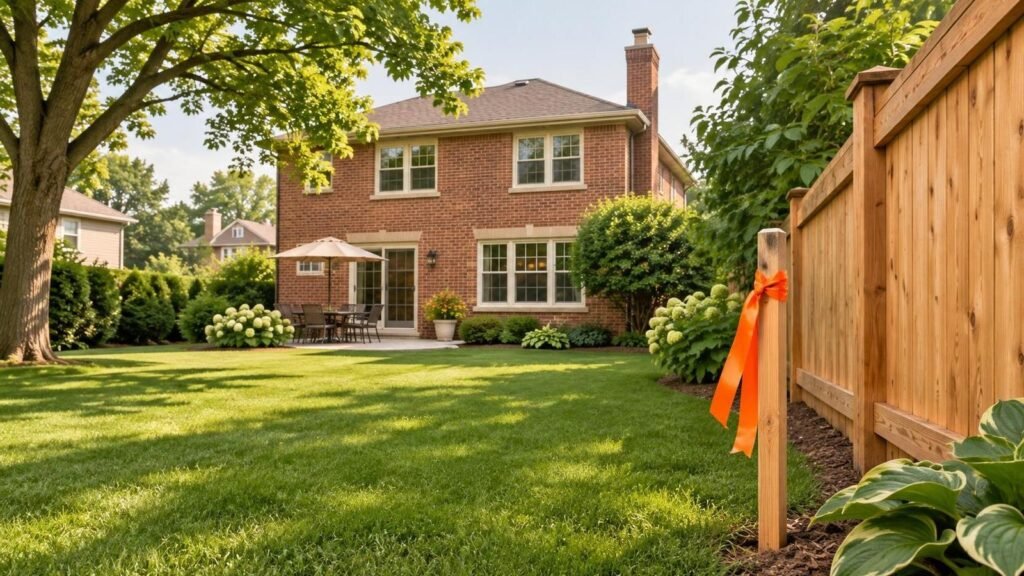
A title search only checks what’s recorded. It can’t tell whether the neighbor’s fence is two feet onto your lot, whether the shed is sitting on a utility easement, or whether the driveway crosses the property line. The survey can. In Chicagoland the standard contract generally makes the seller provide a current survey for single-family homes and townhomes on their own lots. Condos usually don’t need one.
The survey also pays off on the title side. Without it, the owner’s policy includes a broad “general exception” for anything a survey would have shown. With a clean survey, the title company can usually remove that exception and give you extended coverage, so it’s protecting the dirt you’re actually buying.
What surveys turn up around here
- Fences that wander. They’re very common in older Streamwood and Hanover Park subdivisions, where fences went up decades ago and nobody measured.
- Sheds, decks and pools inside easements. Most 1970s–90s subdivisions in Bartlett, Carol Stream and Bloomingdale have public utility and drainage easements along the rear and side lot lines. If the village or a utility needs to dig, whatever’s in the easement can be removed.
- Additions that crowd the setbacks. That’s a village zoning question, not a title one, but the survey is usually how anyone notices.
- Drainage swales that got filled in or graded over. This comes up a lot in Elgin and the newer Kane County subdivisions, and it matters the first time a big spring storm rolls through.
None of these automatically kills a deal. Most get settled with a quick fix, a credit, a written agreement with the neighbor, or an endorsement from the title company. They just need to be found before closing, while you can still negotiate.
The one thing to do after closing
Deed and title fraud, where someone records a forged deed or takes out a loan against a house they don’t own, has become a real problem. That’s exactly the risk your owner’s policy is there for, but it’s better not to need it. Cook County’s Clerk offers a free property fraud alert that tells you when a document is recorded against your property, and it’s worth checking whether DuPage or Kane offers something similar if that’s where your home is. It takes five minutes to sign up and is cheaper than any lawsuit.
If you’re buying or selling in the northwest suburbs and want someone to walk you through the commitment or point out what to look for on a survey before it costs you anything, Team Goddard is happy to help. There’s no pitch involved; we just like finding the fence problem before you buy it.
Straight outta the brain of Bob, Garry Real Estate’s in-house lead AI. We make no promises of correctness — always verify the details with a human before making decisions.

