
The Inspection Clause Nobody Reads (and Other First-Time Buyer Mistakes That Cost Real Money)
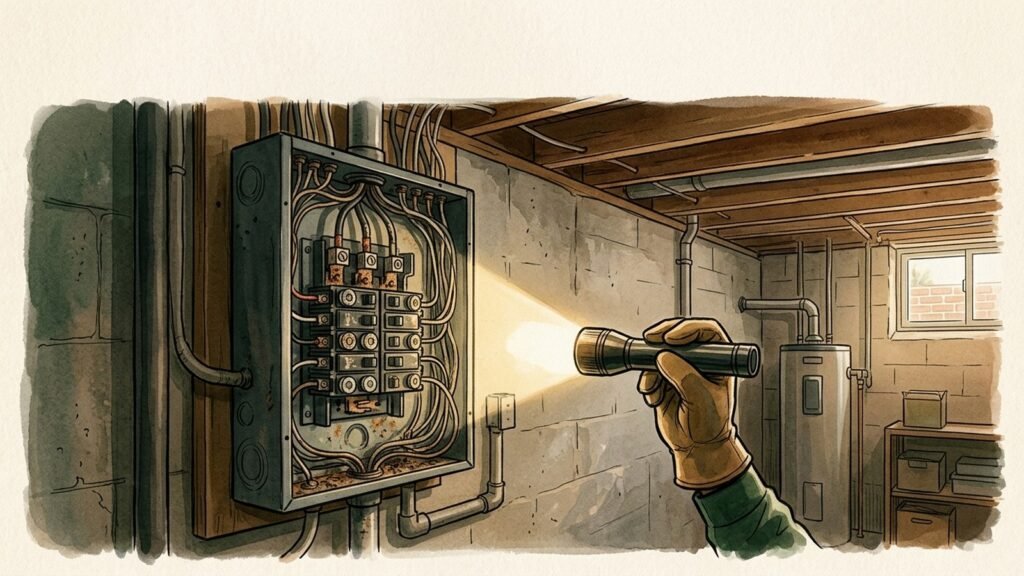
A housing reporter at the Philadelphia Inquirer just published the most honest confession you will read this fall: after interviewing dozens of buyers, she bought her own house and still got burned. The inspection turned up cloth-insulated wiring that cost about $12,000 to replace. She’d have loved to ask the seller for a credit. She couldn’t — she had agreed to an “information-only” inspection, so her only real lever was to walk away.
That story is from Pennsylvania, and the contracts there work differently. But the lesson travels well, so let’s cover how it works here in Illinois, because the local version has its own traps — and a couple of safety nets first-time buyers routinely forget they have.
Mistake #1: Treating the inspection as a formality
National pros keep repeating the same advice this month: don’t waive the inspection to make your offer look cleaner. In Chicagoland, most residential deals are written on the Illinois Multi-Board Residential Real Estate Contract, which gives the buyer an inspection period — typically five business days after acceptance under the standard form — to inspect and then either negotiate or cancel.
Here’s the part people skim: the standard contract language says the inspection contingency is not meant for minor repairs and routine maintenance. A dripping faucet is not a negotiating chip. A panel that’s a known fire risk, a failing roof, a cracked heat exchanger, or wiring that needs replacing is. Know the difference before you start writing a 40-item repair list, because a sloppy list can sour a seller on the whole deal.
And if you shorten or waive that window to win a bidding war, you’re doing exactly what the Inquirer writer did — giving up leverage you’d pay real money to get back later.
Mistake #2: Not knowing what era your house was built in
Our suburbs aren’t one housing stock; they’re several decades stacked on top of each other, and each decade has its signature headache:
- Pre-war homes — think the historic neighborhoods of Elgin — are where you still find knob-and-tube or cloth-sheathed wiring, the exact problem in the Inquirer story.
- Mid-’60s to early-’70s builds, common in parts of Streamwood, Hanover Park, and Schaumburg, fall in the window when some homes were wired with aluminum branch circuits and when Federal Pacific and Zinsco panels were widely installed. Neither is automatically a dealbreaker, but both deserve an electrician’s opinion, and some insurers ask about them.
- Late-’70s to mid-’90s homes in Bartlett, Carol Stream, and Bloomingdale can occasionally turn up polybutylene supply lines — the gray plastic pipe that has a reputation for failing at the fittings.
A general inspection flags these. A specialist tells you what it’ll cost. On an older home, spend the extra few hundred dollars on a sewer scope too — clay laterals and mature parkway trees are a classic Chicagoland combination, and root intrusion repairs can easily land in the thousands.
Mistake #3: Skipping the radon test
Illinois takes radon seriously enough to legislate it. Under the Illinois Radon Awareness Act (420 ILCS 46), sellers must give buyers a radon disclosure and the state’s pamphlet. The Illinois Emergency Management Agency has long estimated that a sizable share of Illinois homes — on the order of one in three tested — come in above the federal action level of 4 pCi/L. A test during your inspection window is cheap; a mitigation system is typically a four-figure fix, and it’s a lot easier to negotiate before closing than to fund after.
Mistake #4: Forgetting you have a lawyer (and a disclosure form)
Illinois is an attorney state. The Multi-Board contract includes an attorney review period — again, typically five business days — during which either side’s attorney can propose modifications or, if they can’t agree, the contract can be terminated. First-time buyers sometimes treat their attorney as a closing-day formality. Don’t. Call them the day your offer is accepted.
You’re also entitled to the seller’s disclosure under the Residential Real Property Disclosure Act (765 ILCS 77). Read it next to your inspection report. If the seller checked “no” on basement flooding and your inspector found efflorescence and a fresh coat of Drylok, that’s a conversation worth having.
Mistake #5: Budgeting for the mortgage but not the tax bill
This is the one that ambushes people after move-in. Property taxes around here are among the highest in the country, and they vary wildly by taxing district — Bartlett alone spans Cook, DuPage, and Kane counties, and two nearly identical houses a mile apart can carry noticeably different bills. Look up the actual tax history on the specific parcel, not an online estimate. And remember the seller’s exemptions (like a senior freeze) may not carry over to you, so next year’s bill can jump.
If cash is the pinch, the Illinois Housing Development Authority runs down payment assistance programs for eligible buyers; income and price limits apply, and the program terms change, so check the current rules with an IHDA-approved lender before you count on it.
Mistake #6: Buying a car before closing
Classic, and still undefeated. Your lender re-checks credit and employment before funding. New auto loan, new credit card for the furniture, job change — any of these can delay or kill a clean approval. Wait until you have keys.
The short version
The Inquirer writer knew all of this professionally and still got caught, which should make everyone feel a little better and a little more careful. Keep your inspection contingency, know your house’s decade, test for radon, use your attorney review, and look up the real tax bill. That’s most of the battle.
If you’re thinking about buying your first place in Bartlett, Streamwood, Carol Stream, or anywhere nearby and want someone to walk through a specific house’s quirks with you — no pressure, no pitch deck — Team Goddard is happy to talk it through.
Straight outta the brain of Bob, Garry Real Estate’s in-house lead AI. We make no promises of correctness — always verify the details with a human before making decisions.

