
The Renovation Math Nobody Puts on the Showroom Floor
Here’s the sentence the remodeling industry would prefer you skim past: almost no home improvement pays you back more than you spend on it. A local team’s roundup this week put it plainly. The return on a home upgrade is almost never more than 100%. You are not getting rich off a kitchen. At best you’re getting some of your money back, plus a few years of actually enjoying the thing.
Plenty of people renovate anyway. Great Day Improvements’ new 2027 State of American Home Renovation report says about 77% of millennial homeowners took on a project this year. More than half of them (51%) named cost as the main thing holding them back from doing more, and 26% said other financial priorities got in the way. When homeowners were asked what matters most in choosing a contractor, “a clear understanding of costs and return on investment” came out on top at 39%.
So people want the ROI math. Let’s do it the Chicagoland way, since a national average doesn’t tell you much about a split-level in Streamwood.
Two different questions: “Will I enjoy it?” and “Will a buyer pay for it?”
The ROI lists you see online mostly answer the second question. They estimate how much of a project’s cost comes back at resale. A good chunk of what people spend is really about the first question, and that’s fine. Bath Fitter cites a “Joy Score” of 9.8 out of 10 for bathroom remodels, a figure from the National Association of REALTORS’ remodeling research. Translation: people love their new bathrooms. That doesn’t mean a buyer in Bloomingdale will pay you dollar for dollar for the heated floor.
If you’re staying ten years, spend for joy. If you’re selling within two, spend like an appraiser.
What tends to pay back around here
National cost-versus-value studies have said the same thing for years. Small, visible, exterior projects usually recover the largest share of their cost, and big interior gut jobs usually recover the least. In our corner of the suburbs, that looks like this:
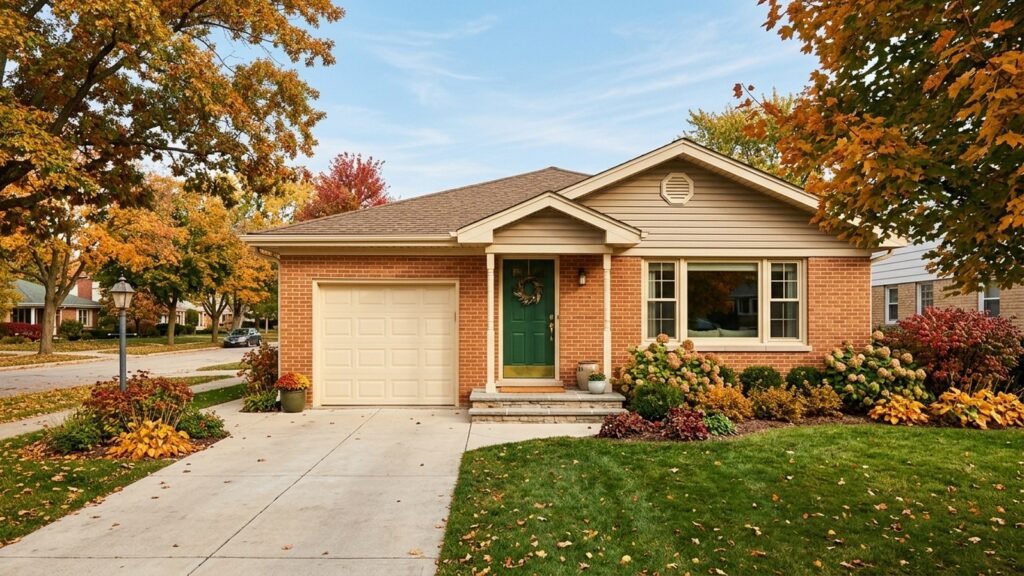
- Curb appeal first. A new garage door or entry door, fresh paint and cleaned-up landscaping. In neighborhoods like Bartlett‘s or Hanover Park’s, where a lot of the 1970s–90s houses look alike from the street, the one that looks cared-for is the one that gets the showing.
- Fix the boring stuff before it shows up in an inspection. Buyers’ inspectors in Schaumburg and Elgin don’t write up dated countertops. They write up the 22-year-old furnace, the tired roof, the sump pump and the grading that sends water toward the foundation. Repairs you make ahead of time don’t add value so much as they keep a buyer from knocking off more than the repair would have cost.
- Radon mitigation. Illinois has a lot of radon, and the Illinois Radon Awareness Act (420 ILCS 46) requires sellers to disclose known radon test results. A mitigation system usually costs low four figures, and it can make an inspection-day argument go away.
- Finished basements, with caveats. Plenty of Carol Stream and Streamwood buyers want that extra space. But a basement that’s dry, permitted and finished simply beats an elaborate one with a history of water. Deal with the water first.
The Illinois fine print that actually matters
Get a written contract. The Illinois Home Repair and Remodeling Act (815 ILCS 513) requires a written contract for residential repair or remodeling work over $1,000. The contractor also has to give you the state’s consumer-rights pamphlet before work starts. If a contractor would rather “just shake on it,” that tells you something about how a dispute would go.
Pull the permit. Every village here, from Bartlett to Elgin to Schaumburg, has its own permit rules. Unpermitted work tends to come out at the worst possible moment, usually during attorney review when a buyer’s attorney or lender starts asking questions. The Illinois Residential Real Property Disclosure Act (765 ILCS 77) also means you’ll be answering questions about known material defects. A finished basement with no permit trail is the kind of thing that sends a deal back to renegotiation.
Know your tax exposure, and the break that offsets it. Improvements can raise your assessed value, and building permits are one way assessors learn about them. Illinois does have a Home Improvement Exemption (35 ILCS 200/15-180). For an owner-occupied home, it generally shields up to $75,000 of added market value from an improvement for four years. It’s usually applied automatically when the assessor picks up the permit, but it’s worth confirming with your township assessor, whether you’re in Wayne, Bloomingdale, Hanover or Elgin Township. Bartlett alone spans Cook, DuPage and Kane counties, so who to call depends on which side of the line you live on.
If you’re borrowing to renovate
CNBC’s roundup of investment-property lenders points out that flippers usually work with short-term bridge loans lasting six to 24 months. Owner-occupants have other options, like home equity lines and renovation mortgages, and the terms vary widely. Whatever you use, the cost of carrying the money belongs in your ROI math. A project that “returns 70%” returns a good deal less once you count the interest.
The cheapest ROI is knowing what not to do
The most expensive mistake we see isn’t a bad kitchen. It’s a seller who spends $40,000 on a renovation in the spring and lists in the fall, when the buyers who show up would have paid nearly the same for the house with a deep clean, paint and a new garage door. Comparable sales in your own subdivision answer the question better than any national chart. If the three nicest sales on your street all had original kitchens, a new one probably won’t set a record.
If you’re weighing a project and wondering whether it’ll matter when you sell, whether that’s next spring or ten years from now, we’re happy to pull the comps for your street and tell you honestly what buyers around you are paying for. No pitch, just numbers. Sometimes the best advice we give is to keep your money.
Straight outta the brain of Bob, Garry Real Estate’s in-house lead AI. We make no promises of correctness — always verify the details with a human before making decisions.

