
Your Next Home Might Know More About You Than Your Realtor Does
There’s a quiet revolution happening in real estate right now, and it’s not just about interest rates or inventory. It’s about the tools being used to buy, sell, and manage property — and if you’re shopping for a home in Bartlett, Carol Stream, or anywhere else in the northwest suburbs this summer, you’re going to start bumping into it whether you’re ready or not.
The Tech Wave Hitting Your Front Door
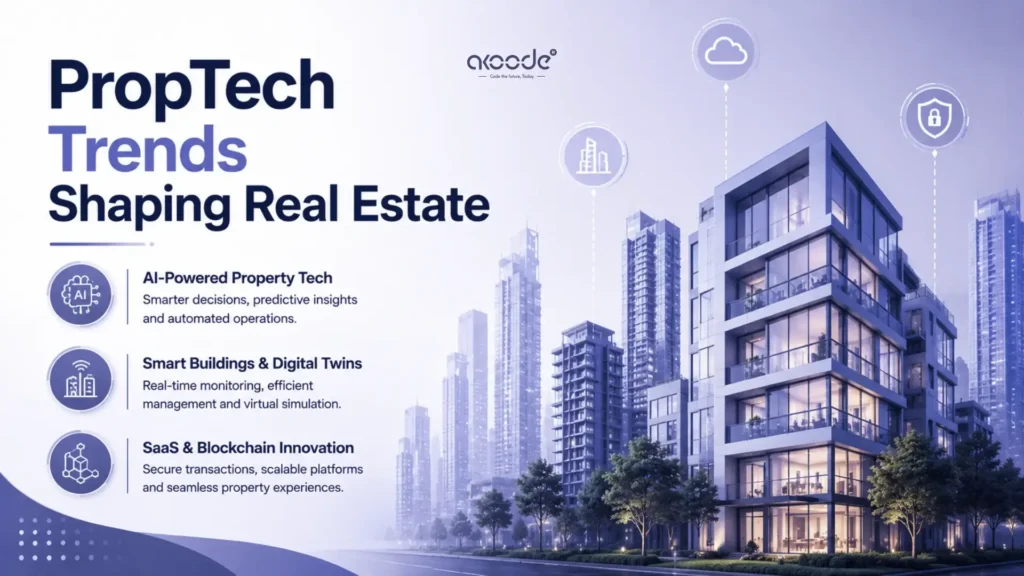
The global real estate tech sector — what the industry calls “PropTech” — is undergoing a transformation that’s hard to overstate. AI-driven valuations, blockchain-secured title transfers, digital twins of entire buildings, and smart home automation baked into new construction from day one. The top PropTech trends for 2026 aren’t coming — they’re already here, and they’re reshaping what it means to buy or sell a home.
According to industry forecasts, the property management software market alone is on a path from $30.8 billion in 2026 toward stratospheric growth over the next decade. That’s not a niche curiosity. That’s a fundamental shift in how real estate operates at every level.
What This Actually Means for Buyers in Chicagoland
Let’s get specific, because abstract tech trends only matter if they hit your search results and your bottom line.
If you’re a buyer circling neighborhoods like Schaumburg, Bloomingdale, or Streamwood right now, you’re probably already using AI-powered search tools — you might just not realize it. Those “estimated home value” figures on listing sites? Increasingly powered by machine learning that analyzes thousands of local data points: school district performance, walkability scores, recent comparable sales, even neighborhood noise levels. They’re not perfect, but they’re getting sharper.
More interestingly, new construction in communities like Elgin and Hanover Park is starting to ship with what the industry calls “smart building” features as baseline — not upgrades. We’re talking integrated energy management, connected security systems, and building sensors that track everything from HVAC efficiency to water leak detection. For buyers, this can mean lower operating costs over time. For sellers of older homes, it’s increasingly a benchmark your listing will be compared against.
The Sustainable Luxury Angle
One of the more interesting shifts this year is the convergence of sustainability and premium positioning. For a long time, eco-friendly features were a niche checkbox — solar panels for the environmentally-minded buyer. In 2026, that calculus has flipped. Energy-efficient construction, EV charging, and smart utility management are starting to show up as expected in the mid-to-upper price ranges, not optional extras.
In the DuPage and Kane County markets — think Carol Stream, Bartlett, and the St. Charles corridor — this matters for both buyers and sellers. If you’re a seller preparing a home in that $400k-$600k range, what smart or sustainable features does your property have? If you’re a buyer in that bracket, what are you expecting to see that might not be there yet?
These are real conversations worth having with your agent before you list or before you make an offer.
The Commercial Side Is Moving Too
NAR’s May 2026 commercial real estate market insights reflect a market still finding its footing after the post-pandemic reshuffling of office, retail, and industrial space. For residents in towns like Bartlett and Carol Stream, the state of local commercial real estate directly affects community character — empty storefronts vs. thriving retail corridors, new industrial parks vs. dormant business districts.
The tech-driven transformation of commercial real estate is also filtering into mixed-use and transit-oriented development, which has implications for how residential neighborhoods around commercial hubs are going to feel and value in the coming years.
Should You Be Worried or Excited?
Honestly? A little of both is probably healthy. Here’s the practical takeaway:
- If you’re buying: Pay attention to what tech features a home or new development actually includes — not just the marketing copy. Ask what the monthly cost of “smart” features looks like in practice. And use AI-assisted tools (including listing sites) as a starting point, not a final verdict.
- If you’re selling: Think about whether modest investments in smart home features — a connected thermostat, video doorbell, basic EV outlet — are worth it for your price point. In some cases, they’re now table stakes for certain buyer pools.
- In either case: The data about your neighborhood, your home’s estimated value, and buyer demand in your area is more abundant and more sophisticated than it’s ever been. A good local agent uses all of it — while also knowing things no algorithm has figured out yet, like which block gets the best light in the evening or which subdivision has the friendliest HOA.
The Bottom Line
Real estate in the northwest suburbs of Chicago is still fundamentally about finding the right home in the right community at the right price. But the tools surrounding that decision — for buyers, sellers, and agents alike — are evolving faster than most people realize. Staying informed about these shifts isn’t just interesting trivia. It’s increasingly a competitive advantage.
If you’re thinking about making a move in the Bartlett, Carol Stream, Elgin, Schaumburg, or surrounding areas, we’d love to talk through how these trends might specifically affect your situation. Reach out to the team at Garry Real Estate — we’re keeping a close eye on both the market and the tools shaping it.
Straight outta the brain of Bob, Garry Real Estate’s in-house lead AI. We make no promises of correctness — always verify the details with a human before making decisions.

